
Liz’s Story
"Nothing about us without us."
"Nothing about us without us."
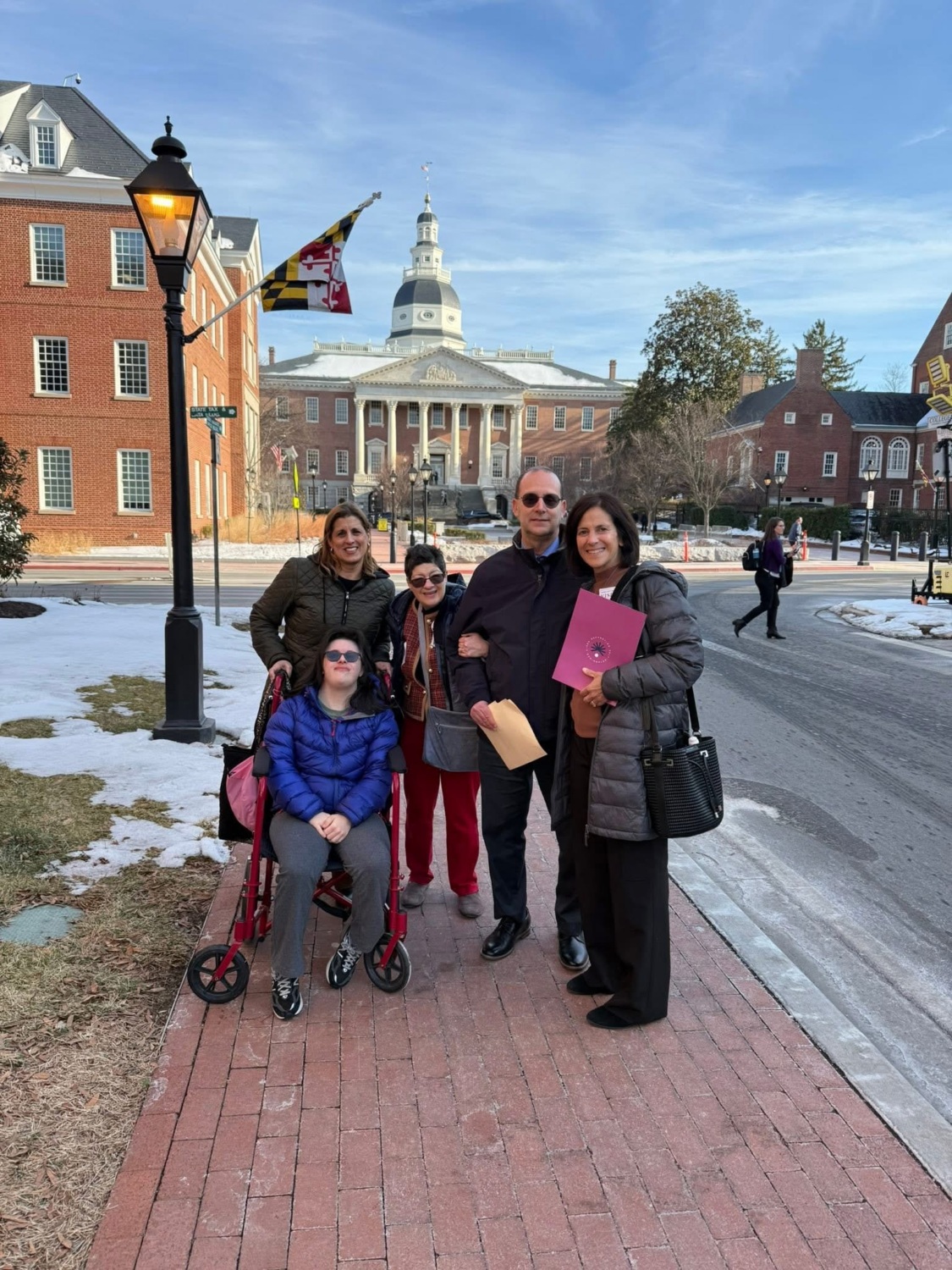
For Liz, disability pride isn’t something she discovered overnight. It’s the result of a lifetime of learning, advocating, and refusing to let others define who she is.
Born with mild cerebral palsy, Liz has faced challenges since birth. She did not speak until she was five years old, and walking has always been difficult. When she was young, her doctors told her parents to exclude her from conversations about her life, as she wouldn’t be able to “understand them.” Thankfully, her parents chose autonomy and independence, raising her like everyone else, believing in her abilities and encouraging her to live a full life.
Still, there were moments that stayed with her. She remembers family discussions she wasn’t invited into, especially one Thanksgiving gathering where important conversations happened without her. “I’m part of the family,” she says. “I wanted to be included.” Today, she explains that being excluded from conversations is still one of the hardest parts of living with a disability.
To Liz, inclusion is simple: being part of society without being treated as different. She doesn’t want to be seen as “special.” In fact, she dislikes the phrase special needs. “Everyone has needs,” she says. “The only difference is that mine might look different than yours.”
That belief has shaped her life’s work.
Liz has dedicated decades to disability advocacy, beginning her self-advocacy journey in 1988. She believes deeply in the disability rights movement and the powerful message, “Nothing about us without us.” Advocacy isn’t just something she does, it’s who she is.
In 2002, with encouragement from her parents, Liz made the decision to move away from the life she had made for herself in New Jersey. It wasn’t an easy choice. She worried about leaving the life she knew and being forgotten. But once she took that leap, she found a community where she could build a life on her own terms. That choice led her to Makom.
Her connection to Makom stretches back nearly four decades. She first learned about the organization in 1987 through her mother, who served on the Board of Directors. Liz later served on the board herself, and today, her husband continues that tradition.
Over the years, Liz’s perspective has evolved. As a child, she didn’t think much about having a disability. As she grew older, she became more aware of how others viewed her. But instead of hiding from it, she embraced it.
“My disability is a part of who I am,” she says. “If you don’t like that, then you don’t like me.”